Written by Dorothea Iatrou, certified Reformer and Mat Pilates instructor with a BSc in Physical Education and Sport Science, a background as a competitive track and field athlete, and wellness supervision experience at a five-star resort.
If you are new to Pilates, the very first decision you will face is a simple-sounding question with a surprising amount behind it: reformer or mat? Both are real Pilates. Both build the same deep strength, control and body awareness that Joseph Pilates spent a lifetime developing. But they get you there along different roads, and the road that suits you depends on your body, your goals and how you like to train. This guide walks through exactly how each one works, what it is best at, and how to choose the starting point you will actually stick with.
A quick word on what Pilates actually is
Before we compare the two, it helps to remember what they have in common. Joseph Pilates originally called his method "Contrology", because the whole system is about controlled, precise movement driven from a strong centre. Every exercise, on the mat or on a machine, trains the deep core, improves posture and alignment, and teaches you to move with intention rather than momentum. So whichever format you choose, you are practising the same method and chasing the same qualities: a stable centre, mobile joints, and strength you can actually use in daily life.
What mat Pilates is and how it works
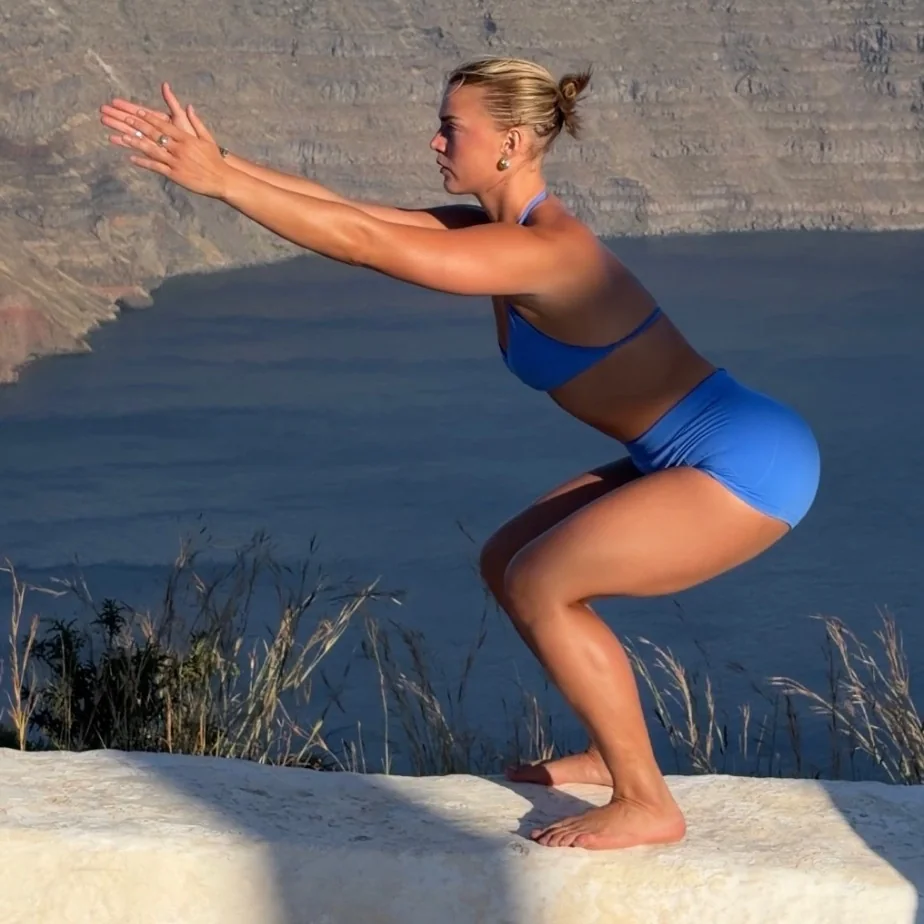
Mat Pilates uses your own body weight as the only resistance. You work on a mat through a sequence of exercises that challenge your core to stabilise the spine and pelvis while your arms and legs move. There is no machine to guide you, which means your deep stabilising muscles have to do the organising themselves. That is exactly why mat work is such a powerful teacher.
The benefits of mat Pilates are easy to underestimate because the equipment is so simple:
- It builds genuine body awareness. Without springs or straps doing part of the job, you learn to feel which muscles are working and which are switching off.
- It is endlessly accessible. All you need is a mat and a little floor space, so the practice travels with you and costs almost nothing to maintain between classes.
- It teaches the fundamentals. The breathing, the centring, the precision: mat work is where these are forged, and they carry over into every other kind of training you do.
For most beginners, mat classes are the ideal entry point precisely because they teach you how to control your own body first. That foundation makes everything that comes later, including the reformer, far more effective.
What reformer Pilates is and how it works
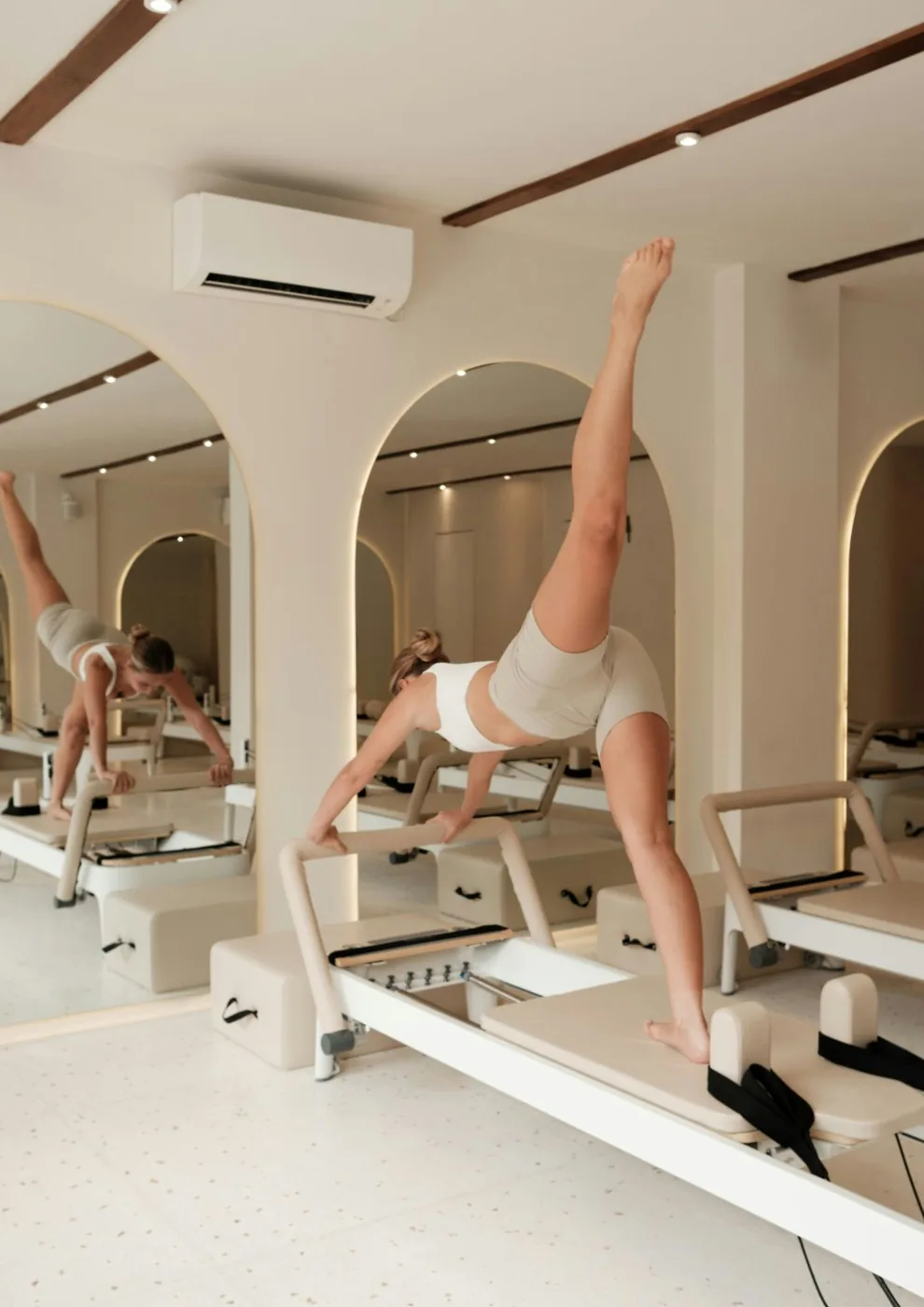
The reformer is the machine most people picture when they imagine a "Pilates studio": a sliding carriage that runs on rails, connected to a set of springs, with a footbar, straps and pulleys. By changing the springs you change the resistance, and that single feature is what makes the reformer so versatile.
The springs can make an exercise easier for a beginner by supporting the movement, or far harder for an advanced client by loading it, all within the same position. That range is why reformer work is so widely used:
- It builds strength and tone efficiently. The added resistance challenges muscles through a full range of motion, and many people see firmer, more defined arms, legs and abdominals within a dozen or so consistent sessions.
- It supports rehabilitation. Because resistance and support are adjustable, the reformer is a favourite tool for returning to movement after injury, working around sensitive joints, and progressing safely over time.
- It expands the repertoire. The straps, footbar and moving carriage open up exercise variations that simply are not possible on a mat, which keeps the work fresh and lets you target specific muscles precisely.
Reformer vs. mat, side by side
Here is how the two compare on the things that usually decide it:
- Resistance: mat uses body weight only; the reformer adds adjustable spring resistance and support.
- Learning curve: mat asks you to self-organise, which is demanding but deeply educational; the reformer guides your alignment, which can make good form easier to find early on.
- Speed of visible results: many people feel and see tone faster on the reformer thanks to the added load, though mat builds a strength that is just as real.
- Cost and convenience: mat is low cost and can be practised anywhere; the reformer requires a studio and specialised equipment.
- Injury and rehab: the reformer's adjustability makes it especially useful when working around an injury or a specific limitation.
Notice what is missing from that list: a winner. Neither format is better than the other. They are two expressions of one method, and the research backs this up: studies repeatedly find that the best Pilates practice is a consistent one, regardless of the equipment.
So which should a beginner start with?
If you are completely new, starting with mat classes is a reliable choice. You learn the breathing, the core engagement and the principles in their purest form, and you build the control that makes the reformer feel intuitive when you get there. That said, plenty of people fall in love with Pilates because a reformer class made the movements click for them, with the springs guiding their bodies into the right shapes. There is no wrong door.
The honest answer most experienced teachers give is this: do not think of it as a permanent choice. Try both. Many clients end up doing mat work to deepen their fundamentals and reformer work to load and progress them, moving between the two depending on the week, the goal and how their body feels.
How often should you practise?
Consistency matters far more than the equipment you choose or the length of any single session. Two focused classes a week is enough for most people to notice real change within about a month: better posture, a stronger centre, and a body that moves with more ease. Three is wonderful if your schedule allows. One a week still helps, especially when you keep up a little mat work at home in between.
Frequently asked questions
Is reformer Pilates harder than mat Pilates?
It can be, but it can also be easier. The springs can either load a movement or support it, so a reformer class can be gentler or far more demanding than mat work depending on how it is set up. Difficulty comes from the programming, not the format.
Can I do reformer Pilates as a complete beginner?
Yes. Beginners do reformer Pilates all the time, often in introductory or small-group classes where the instructor sets the springs and guides your alignment. If anything, the machine can make correct form easier to find at the start.
Will mat Pilates still tone my body without a machine?
Absolutely. Mat Pilates builds real, functional strength using body weight. You may notice tone develop a little more gradually than on the reformer, but the strength and control you gain are genuine and carry over into everyday movement.
Do I have to choose one forever?
No. The strongest practice usually blends both. Use mat work to sharpen your fundamentals and reformer work to add resistance and variety, and let your goals guide the mix.
What a class actually feels like
Descriptions only go so far, so here is the lived experience. A mat class usually begins on the floor with breathing and small, precise movements that wake up the deep core. From there the work builds: rolling exercises that mobilise the spine, leg and arm sequences that ask your centre to hold steady, and longer holds that quietly burn. You leave feeling lengthened and worked, but rarely wrecked.
A reformer class has a different rhythm. You spend the session on the moving carriage, changing springs between exercises, pushing and pulling against resistance with your feet in straps or your hands on the bar. The carriage glides, so there is a flowing, almost dance-like quality to it, and the springs give constant feedback that helps you find your alignment. Many people describe their first reformer class as the moment Pilates finally "clicked".
Three myths worth clearing up
"Pilates is just stretching." It is not. Pilates is strength work that happens to improve flexibility. The control required to move slowly and precisely is genuinely demanding, which is why even fit, strong people are humbled by their first proper session.
"The reformer is only for advanced students." The opposite is often true. Because the springs can support as well as load a movement, the reformer is frequently used to make exercises more accessible for beginners and for people working around injuries.
"Mat Pilates is the easy option." Mat work removes the machine's guidance, so your own deep muscles have to do all the stabilising. That can make a simple-looking mat exercise surprisingly hard. Easy is not the word most people reach for afterwards.
Listening to your body along the way
Whichever format you choose, the most important habit you can build is paying attention. Pilates rewards the person who notices the difference between effort and strain, between a muscle working and a joint complaining. If something sharp or pinching shows up, ease off and tell your teacher; if you simply feel worked and warm, that is the practice doing its job. This quiet, honest dialogue with your own body is, in many ways, the real point of Pilates, and it is a skill that serves you far beyond the studio.
Train with Dodo Fit
Ready to start? Book a session with Dorothea and we will find the right starting point for your body and your goals. Browse the class options, check the weekly schedule, or get in touch with any questions.