Written by Dorothea Iatrou, certified Reformer and Mat Pilates instructor with a BSc in Physical Education and Sport Science, a background as a competitive track and field athlete, and wellness supervision experience at a five-star resort.
Pilates can look, from the outside, like a series of slow and elegant exercises. But underneath every movement sit six guiding principles that turn those exercises into something genuinely transformative. They are not rules to memorise and forget. They are a way of moving, and once you understand them, even the simplest exercise becomes deeply effective. Here is what each one means and, more importantly, how it shows up in your body during a class.
Where the principles come from
Joseph Pilates did not publish a tidy list of six principles himself. He called his method "Contrology" and described it through his exercises and writing. The six principles we teach today, breath, concentration, centring, control, precision and flow, were distilled later by the teachers who carried his work forward. They have endured because they capture, simply and accurately, what makes the method work.
1. Breath
Breath is widely considered the most important principle, the one that makes the others possible. Joseph Pilates stressed breathing constantly, treating full, deliberate breaths as the key that unlocks every exercise. In Pilates we breathe laterally, sending the air into the sides and back of the ribcage rather than letting the belly balloon outward. This keeps the deep core engaged while still allowing a full breath.
How it shows up in class: your teacher will cue you to inhale to prepare and exhale on the effort. That timed exhale is not decoration; it switches on the deep abdominal muscles exactly when you need them most.
2. Concentration
Concentration is the bedrock of the method. Pilates asks you to bring full attention to every exercise and to the movement of your body, because focused intention is what builds body awareness, and body awareness is what makes the movement work. This is also why a Pilates class feels mentally absorbing in a way many workouts do not.
How it shows up in class: you are asked to feel each movement rather than rush through repetitions. When your mind wanders and the movement goes on autopilot, the exercise quietly loses most of its value.
3. Centring
All movement in Pilates originates from the centre of the body, what Joseph Pilates called the "powerhouse". This is not just the abdominals; it includes the lower back, the hips and the pelvic region. Strength and stability here underpin every other motion, and building it improves posture and makes everyday activities feel simpler.
How it shows up in class: before your arms or legs move, you are cued to find and engage your centre first. Movement then radiates outward from a stable core rather than being yanked along by the limbs.
4. Control
Remember that Pilates was originally called Contrology. Control is the principle the whole method is named after. Joseph Pilates placed enormous emphasis on deliberately controlling every movement and every part of the body, in both directions, never letting gravity or a spring do the work for you.
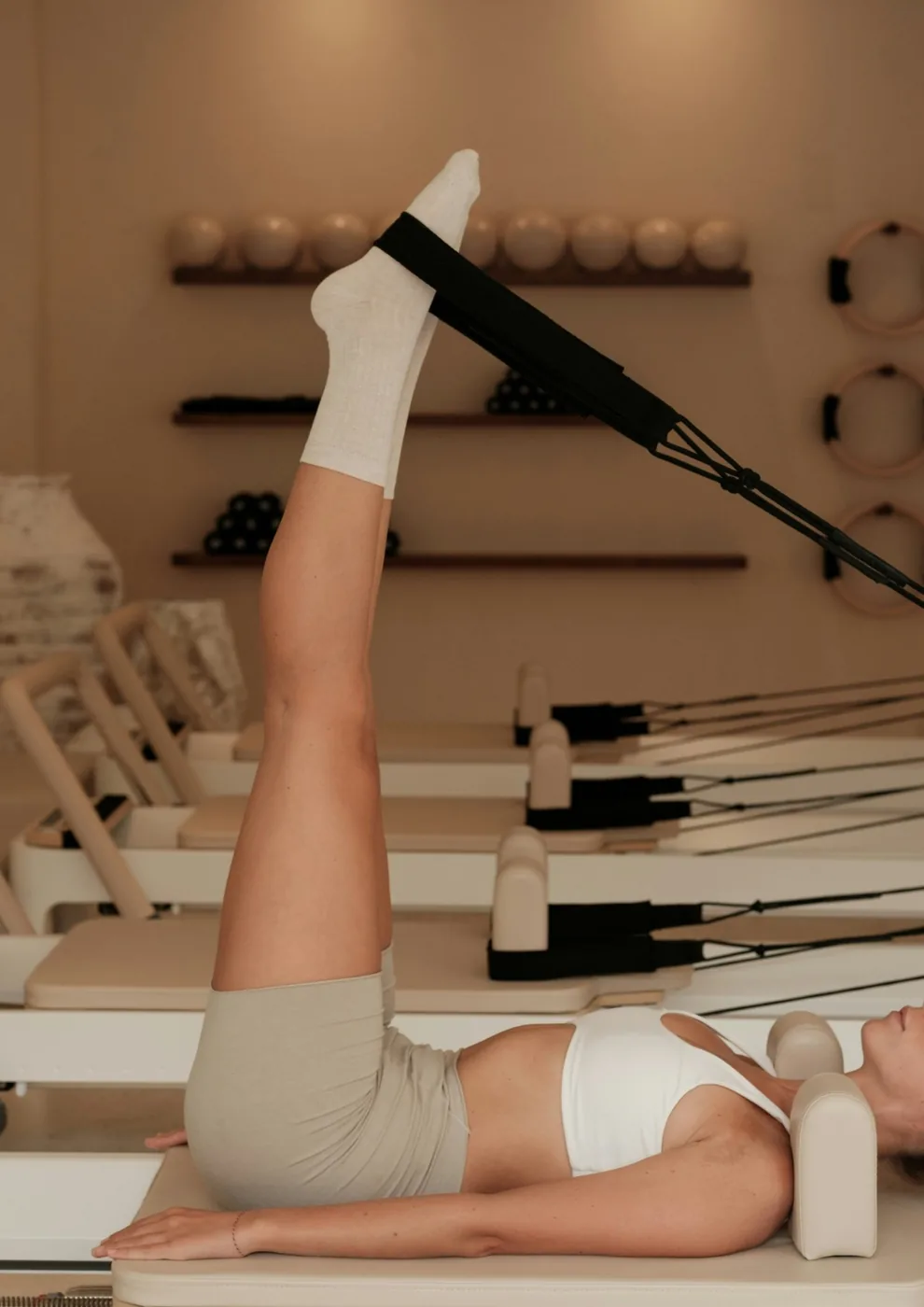
How it shows up in class: the lowering phase of an exercise matters as much as the lifting phase. You resist on the way back, stay precise at the end ranges, and never simply drop or swing.
5. Precision
Precision is about accuracy: paying attention to alignment and form so that each movement targets the right muscles and delivers its full benefit. In Pilates, one exact repetition is worth more than ten sloppy ones. Quality always beats quantity.
How it shows up in class: your teacher will fine-tune small details, the angle of a limb, the position of the pelvis, the placement of the ribs, because those details are what make the exercise land where it should.
6. Flow
Flow is the smooth, continuous transition between movements that makes exercises feel interconnected rather than isolated. It keeps the body engaged, builds stamina and creates a sense of rhythm, so a session feels less like a workout and more like a practice.
How it shows up in class: as you progress, the pauses between exercises shrink and the work begins to feel like one continuous, flowing sequence. That seamlessness is both beautiful and physically demanding.
How the six principles work together
The principles are not a checklist to run through one at a time. They operate together, all at once. Breath fuels the movement and times your core engagement. Concentration keeps your attention on the work. Centring gives the movement a stable source. Control governs how you move through it. Precision makes sure it lands where it should. Flow strings it all into a coherent practice. Take any one away and the exercise loses something; hold them all and even a basic movement becomes remarkably effective.
Applying them as a beginner
You do not need to master all six at once. Start with breath, because it anchors the rest, then layer in concentration and centring. Control, precision and flow deepen naturally as your body learns the work. A good instructor will cue these principles continuously, which is one of the real advantages of practising with guidance rather than following a video alone.
Frequently asked questions
Did Joseph Pilates write down the six principles?
Not as a formal list. He described his method, Contrology, through his exercises and books. The six principles were articulated later by teachers who systematised his approach, and they remain the clearest summary of what the method is about.
Which principle is the most important?
Most teachers point to breath, because it underpins every movement and makes the other principles possible. Centring and control are close behind, since the method is literally named after control.
Do the principles apply to both mat and reformer Pilates?
Yes. The six principles are the foundation of the whole method, so they guide every exercise whether you are on a mat or a reformer. Learn more about the two formats in our guide to reformer vs. mat Pilates.
From Contrology to today
Joseph Pilates developed his method in the first half of the twentieth century, refining it while working with everyone from dancers to people recovering from injury and illness. He named it Contrology to capture its essence: the conscious control of the body through the mind. When he and his wife Clara opened their New York studio, the dancers and performers who trained there carried the work outward, and over the following decades teachers distilled his ideas into the six principles we use today. The principles are, in effect, a faithful translation of one man's lifelong obsession with how human beings should move.
How we teach the principles at Dodo Fit
In practice, you will rarely hear all six named in a single class. Instead, a good teacher weaves them into the cues you receive. "Exhale as you lift" is breath and control. "Draw everything into your centre before you move" is centring. "Feel this one, do not rush it" is concentration and precision. "Flow from this into the next without a pause" is exactly what it sounds like. Over time these cues become your own internal voice, and you begin to apply the principles without being told. That is the real goal: not to memorise a list, but to move by it.
This is also one of the clearest arguments for practising with a qualified instructor, at least at the start. A video can show you the shape of an exercise, but it cannot see when your shoulders creep up, your breath holds, or your centre disengages. Live, attentive cueing is what turns the six principles from words on a page into the way your body actually moves.
Can I practise the principles at home?
Yes, and you should. Even a short daily routine becomes far more valuable when you bring breath, concentration and control to it. The principles travel with you; they do not stay in the studio.
Common mistakes that break the principles
Knowing the principles is one thing; keeping them under fatigue is another. A few patterns tend to creep in, and naming them helps you catch them:
- Holding the breath. When an exercise gets hard, the instinct is to clamp down and stop breathing. That breaks the very principle that powers the movement. Keep the breath flowing, and exhale on the effort.
- Chasing repetitions. Rushing to finish a set sacrifices precision and control for numbers. Slow down. Five exact repetitions beat fifteen sloppy ones every time.
- Losing the centre. As the limbs get tired, the core often disengages and the lower back takes over. The cue is always the same: reconnect to your centre before you move again.
- Forcing the range. Precision is not the same as going as far as possible. A smaller, well-controlled movement is more valuable than a larger one you cannot govern.
None of these mean you are doing it wrong; they are simply the places attention tends to slip. Noticing them is how the principles become second nature.
Train with Dodo Fit
Want to feel the principles in action? Book a session with Dorothea and we will find the right starting point for your body and your goals. Try them in a mat class or on the reformer, check the weekly schedule, or get in touch with any questions.